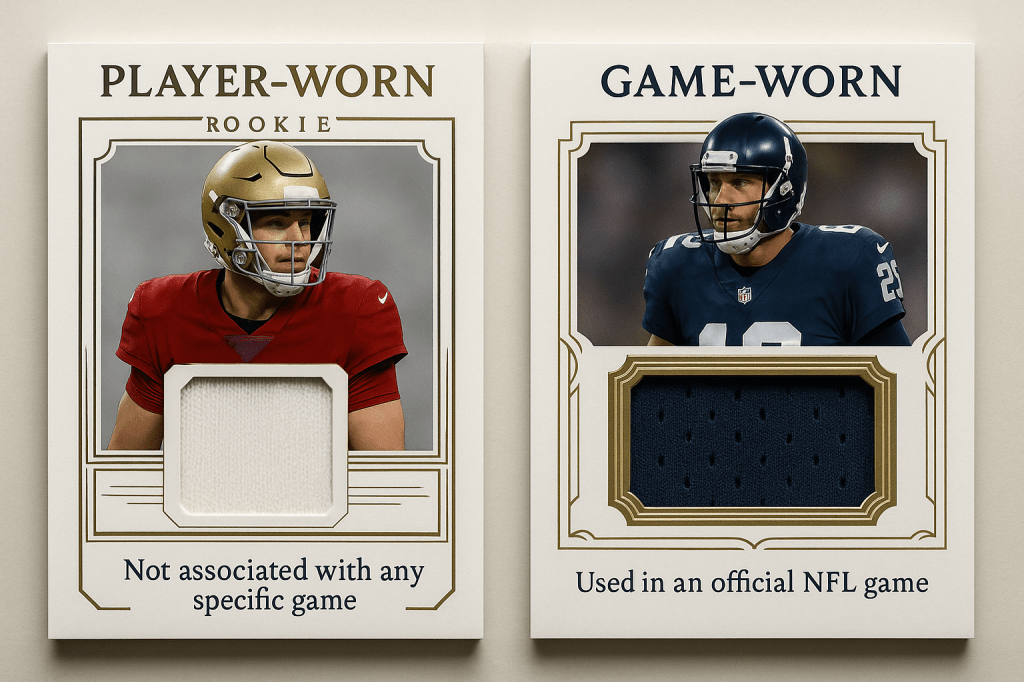
Player worn vs game worn is one of the most important distinctions in modern sports card collecting — especially for memorabilia-based products. In the early 2000s through the early 2010s, it was common for trading cards to feature game-used or event-worn materials across football, basketball, and baseball. Even mid-tier sets offered relics tied to on-field use.
But around 2015, especially in football, this shifted. Game-worn jerseys became scarce. Most relic cards — even in premium boxes — now feature player-worn materials, often used briefly in photo shoots or signing sessions. The rise in player awareness, secondary market dynamics, and manufacturer limitations all contributed to this change.
Today, baseball leads in game-used consistency thanks to Fanatics’ vertically integrated control. Upper Deck dominates hockey with game-worn cards in most sets. Football and basketball? Nearly all memorabilia is player-worn.
Here’s how we got here — and what’s next.
Game-Worn Definition in Card Manufacturing
Game-worn memorabilia means the swatch in the card was used by the athlete during an official game — regular season, postseason, or exhibition. These materials are often photo-matched or team-sourced and are authenticated by the manufacturer.
Look for language like:
- “Used in an official NFL game”
- “This memorabilia is certified game-used”
- “Worn during the 2020 NBA Finals”
These relics tend to show visible wear — scuffs, dirt, sweat discoloration — and command a price premium. Game-worn patches are especially valuable when tied to a specific play, stat milestone, or major game.
Player-Worn Meaning in Modern Releases
Player-worn means the athlete wore the item, but not in a game. It may have been put on for a few seconds at a photo shoot, a private signing, or a Rookie Premiere. In most modern football and basketball sets, especially after 2015, this is the standard.
Common label language includes:
- “The enclosed material was worn by the player”
- “Not associated with any specific game or event”
- “Event-used during Rookie Photo Shoot”
Some player-worn patches are never even associated with on-field play — yet they are inserted into cards from high-end boxes selling for $1,000+.
Decline of Game-Worn in Football Cards After 2015
Between 2005–2014, game-used relics were standard in products like:
- Topps Triple Threads
- Panini National Treasures
- Leaf Limited
- Exquisite Collection
But by 2015, the game-used content in football dropped significantly. Why?
- Jersey costs increased due to player demand and secondary market value.
- Players began keeping their own gear, aware of future revenue potential.
- Teams tightened control over jersey distribution.
- Panini shifted to photo shoot events for logistical speed and mass production.
Barry Bonds once spoke about this future. He called it “sad” that Willie Mays didn’t preserve his own gear, recognizing that authenticated game-used items would become a major collectible asset. Bonds reportedly retained bats, gloves, and jerseys from his career — a move that now looks visionary.
Where Game-Worn Still Exists
Baseball
Thanks to Fanatics, MLB cards continue to feature true game-used memorabilia more consistently than any other sport. Sets like:
- Topps Museum Collection
- Topps Tribute
- Topps Dynasty
frequently include authenticated patches with MLB holograms, allowing collectors to verify the exact game the item came from.
Hockey
Upper Deck continues to use game-worn materials across most NHL products. Even mid-tier lines like:
- SP Game Used
- Artifacts
- Black Diamond
include authentic in-game relics. Hockey remains a reliable market for collectors seeking true memorabilia.
Basketball
Game-worn exists, but mostly in ultra-premium sets like:
- Flawless
- Immaculate
- Select RPAs (rare)
However, many cards from Prizm, Donruss, and even higher-tier releases include player-worn only relics — with no tie to game action.
Identifying Language on Card Backs
Game-worn vs player-worn often comes down to one sentence on the card back.
Game-Worn Language
- “Game-used memorabilia”
- “Used during an official NFL game”
- “Worn in the 2022 NBA All-Star Game”
Player-Worn or Vague Language
- “Worn during a photo shoot”
- “Not associated with any specific event”
- “The enclosed item was worn by the player”
Collectors should never assume based on product tier or card value. Always read the printed certification text carefully.
Impact on Value and Collector Sentiment
The difference between player worn vs game worn drives pricing, prestige, and collector trust. A game-used patch RPA (rookie patch auto) sells for 2–5x more than a similar player-worn version.
For example:
- A game-used Patrick Mahomes RPA from National Treasures can exceed $100,000
- A similar card with a player-worn patch may sell for $20,000–$30,000
The collector market is increasingly vocal about this shift. Forums like BlowoutCards, Discord trading groups, and Reddit threads are filled with frustration over the rarity of game-used content in modern boxes.
Hope for the Future with Fanatics
With Fanatics acquiring exclusive rights for NFL and NBA card production starting in 2026, collectors are cautiously optimistic. Fanatics has proven its ability to deliver authenticated game-used memorabilia in MLB products and Fanatics-branded auctions.
Their access to:
- Players directly (through marketing deals)
- Team-issued gear
- League authentication pipelines
…means Fanatics could reintroduce game-used relics across football and basketball sets — restoring balance to memorabilia cards and increasing buyer trust.
 Hobby Card Review
Leave a comment